The service has ended and people are stacking chairs and rounding up their kids. One woman waits near the door until the pastor is free.
"Do you have a minute? I don't really know who else to talk to."
Maybe it's her marriage. Maybe she lost someone last spring, or she has felt flat and heavy for months and can't explain why. Often it is the first time she has told anyone.
Conversations like this happen in churches every week. After decades of working with people who struggle with depression and anxiety, I believe what happens next in that conversation matters more than most of us realize.
In early 2026, Gallup found that 19.1 percent of American adults, an estimated 51 million people, reported currently having or being treated for depression. That is among the highest rates Gallup has recorded and nearly nine points higher than when it began tracking in 2015. Among adults under 30, the rate has more than doubled since 2017, to 28 percent.1
For most of these people, depression gets in the way of daily life. In national data from the Centers for Disease Control and Prevention, 88 percent of people with depression said their symptoms were making it harder to function at work, at home, or with other people.2
Professional help is also getting harder to reach. As of the end of 2025, about 137 million Americans, roughly 4 in 10, lived in a federally designated mental health professional shortage area. Those areas have only about 27 percent of the mental health providers they need.3
So when someone is struggling and can't get an appointment, where do they go?
Very often, they go to their church. A study of the National Comorbidity Survey, published in Health Services Research, found that about one in four Americans who had ever sought help for a mental health condition had gone to a member of the clergy. That is more than had gone to a psychiatrist or a general medical doctor, about 17 percent each.4
A pastor or a friend from church is already part of that person's life, and talking with them doesn't require an appointment.
Church involvement also appears to protect against depression. In a Harvard study that followed nearly 50,000 women for 12 years, published in the Annals of Behavioral Medicine, those who attended religious services most often had about 29 percent lower odds of developing depression than those who never attended.5 Loneliness shows the opposite pattern. In Gallup's latest survey, 33 percent of adults who had felt lonely much of the previous day had depression, compared with 13 percent of those who had not.1
Whether they planned for it or not, churches are already on the front line of mental health.
Churches have come a long way in talking openly about mental health. Pastors preach about it, and people are more willing to admit they're struggling than they were a generation ago.
But awareness doesn't tell you what to do when someone is standing in front of you asking for help. Being aware means you recognize that depression and anxiety are real. Being equipped means you have something to offer that person beyond sympathy and a referral.
Many pastors and lay leaders tell me they want to help but are afraid of saying the wrong thing. That's understandable. The solution is to give the church a program it can offer with confidence, alongside professional care.
We designed the Nedley Depression and Anxiety Recovery Program™ to be run by communities. It is an eight-week program that a church can host in its fellowship hall or even in someone's living room. Each week, participants watch a video lecture and then meet in small groups led by trained facilitators.
The program is built on our research into what causes depression in the first place. In a study of 4,271 community program participants, published in the American Journal of Lifestyle Medicine, we identified ten categories of contributing factors, which we call "hits." They include genetics, childhood development, nutrition, physical inactivity, sleep and circadian rhythm, addictions, toxins, unresolved grief and social stress, medical conditions, and the health of the frontal lobe. When four or more hits were active at the same time, a person was very likely to be experiencing clinical depression.6
Most people who are depressed are carrying several of these hits at once, which is why a single approach so often falls short. Over eight weeks, participants learn how each factor affects the brain and then work on the ones that apply to them. That might mean changing what they eat, getting outside in the morning light, exercising, fixing their sleep, or using cognitive behavioral techniques to break the thought patterns that keep them stuck.
Every participant takes the Depression and Anxiety Assessment Test at the beginning and end of the program, and we have been compiling those results for more than 20 years. Across more than 10,000 people who have completed the community program:
These results come from volunteers leading groups in their own churches and neighborhoods, and they have held steady across thousands of participants. They are why I believe community education is one of the most effective ways we have to help people recover.
You do not need a clinical degree to lead this program. Here is how it works:
In 2025, 372 people completed training to lead the program. Together, they ran 137 programs, 99 in the United States and 38 in other countries. Among the 703 participants who completed both assessments, depression scores fell by an average of 56 percent and anxiety scores by 59 percent.
Bonnie Smith in Montana was certified in January 2025. By the end of that year, she had recruited 12 new leaders who went on to get certified, and she had run five programs serving 74 people. Ella Jones in Wenatchee, Washington, has been leading programs for 20 years. She has conducted 26 of them and reached 349 people in her community, and 15 of the leaders she brought in have gone on to get certified.
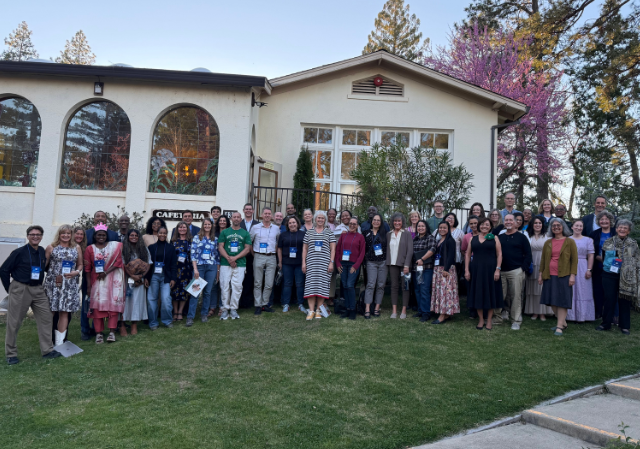
This past March, we brought many of these leaders together for the first time, with guests traveling from as far as Aruba and Ireland. Every one of them started the same way. They got trained, ran their first program, and kept going.
The next time someone waits by the door after service, I hope your church has a program to invite them into and trained people ready to walk through it with them.
Learn more or register to start a community program in your church →
*****
If you or someone you know is in crisis, call or text 988 to reach the 988 Suicide & Crisis Lifeline (U.S.), or call 911.
Please contact us first before publishing this article (but feel free to share it!)